Overview
A two way bass reflex speaker with ribbon tweeter and XP-membrane woofer
Design and components
The Harwood Monitor 17 is a speaker design from 2004 by the German DIY speaker magazine Hobby Hifi. It is a two way speaker using a XP-membrane woofer and a ribbon tweeter.
I first learned about the Monitor 17 reading the Hobby Hifi magazine and was immediately drawn to it because of the looks of the speakers. Also the acoustic measurements published in the magazine looked good.
The speaker units used in the Monitor 17 are:
– Harwood UR2.0 ribbon tweeter
– Harwood 17WXP-MG mid/bass speaker
Both units were manufactured for Harwood Acoustics, a speaker label exclusively retailed by Hifisound in Münster, Germany.
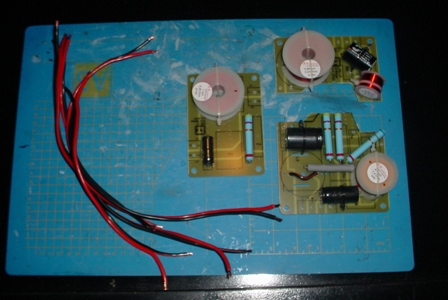
The speaker was designed by Hobby Hifi with a custom passive crossover specifically for the speaker units and speaker cabinet they designed. Hobby Hifi however designed a relatively simple rectangular cabinet. Although it looked okay, I wanted to make something else.
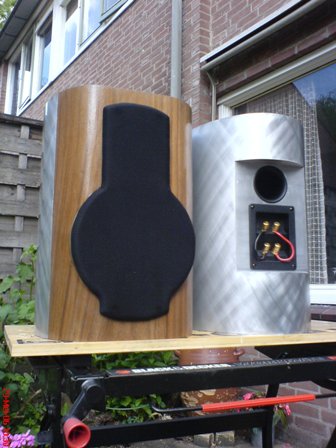
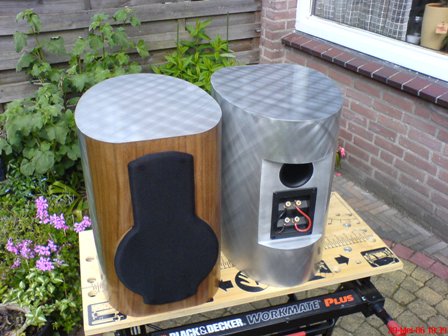
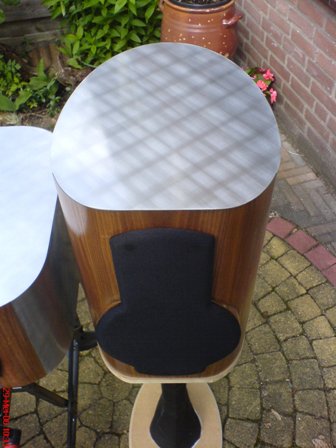
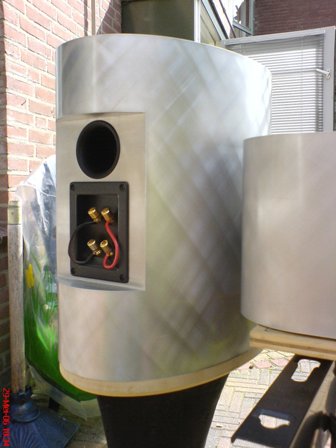
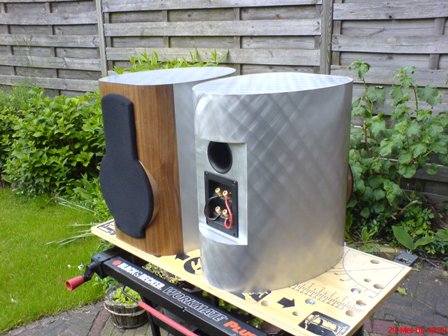
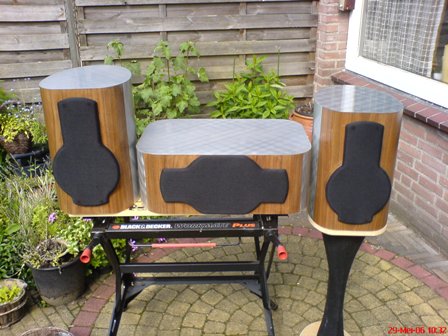
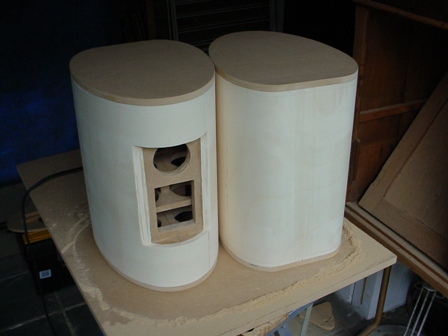
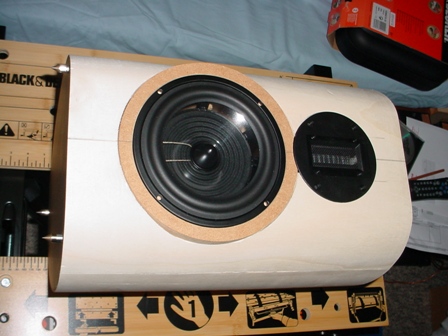
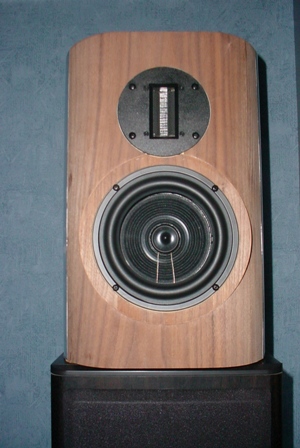
Therefore I changed the design to a box with a rounded, almost egg shaped cross section with a flat top and bottom. The front face is however flat, so the speaker units sit flat in the front. Because of the large radius to the side, the mid/bass speaker protrudes from the sides.
The width, height and internal volume were not (significantly) changed, so I could still use the crossover from the original design by Hobby Hifi.
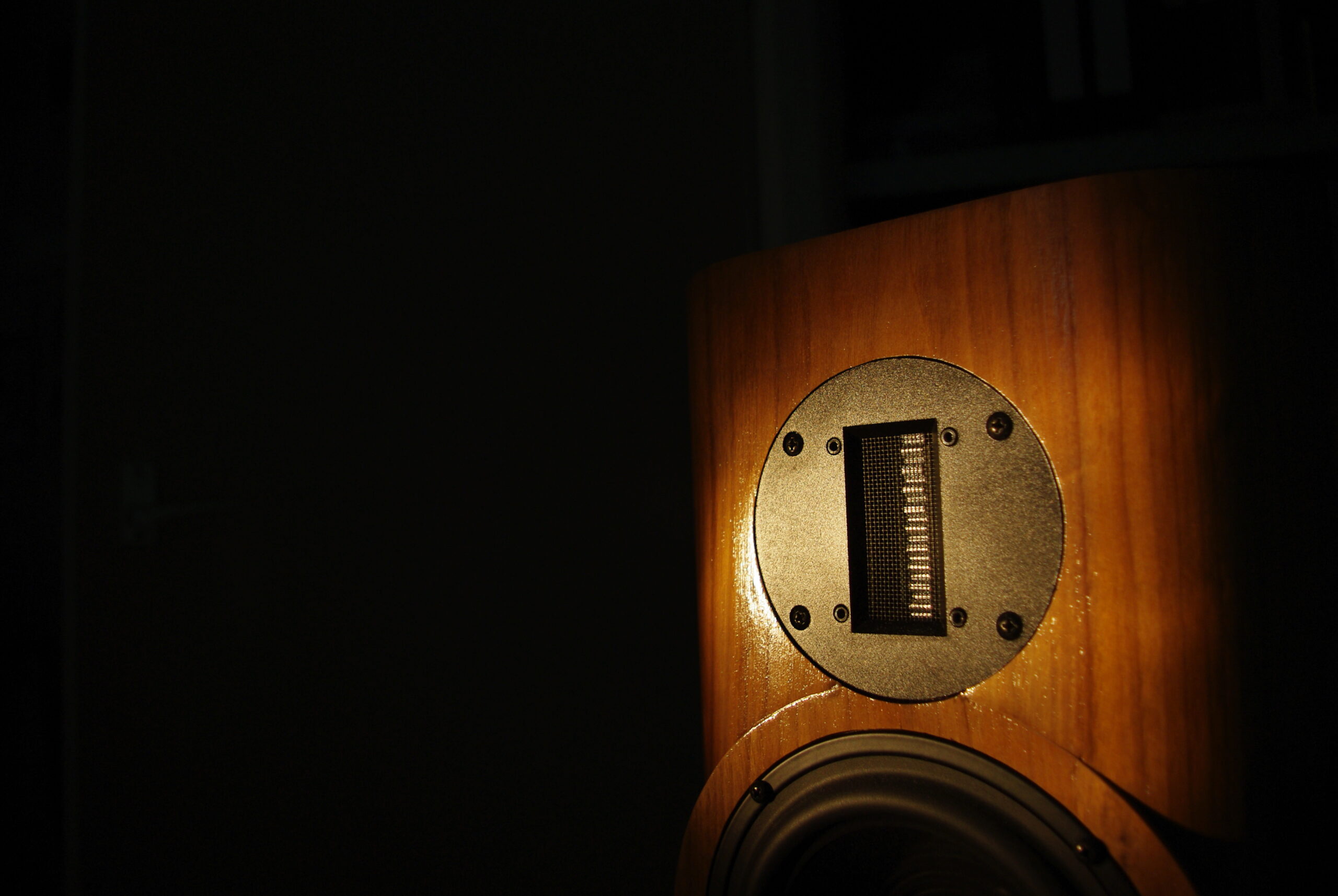
The star of the show in this speaker is the ribbon tweeter, the Harwood UR2.0. This unit is closely related to the Aurum Cantus G2si and Celeritas RB60.
A ribbon tweeter uses a very thin metal foil, in this case folded aluminium, which is both speaker membrane and voice coil. It is suspended in a strong magnetic field. When a signal passes through the membrane, the electrical currents make it move in the magnetic field.
As the metal foil would be an electrical short circuit for any audio amplifier, the low impedance of the foil is transformed to an amplifier friendly level by a transformer integrated into the speaker unit.
“The design was changed from a simple rectangular box to a speaker cabinet with a rounded, almost egg shaped cross section, with a flat top and bottom”.
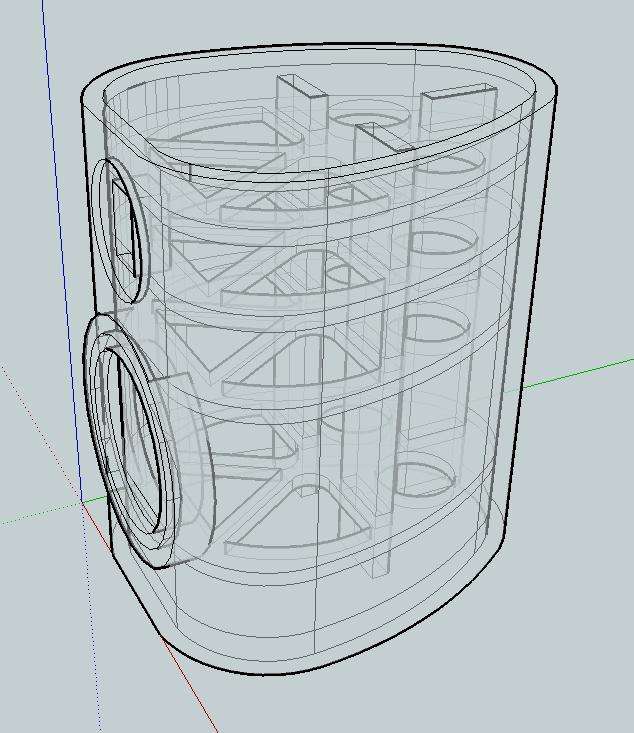
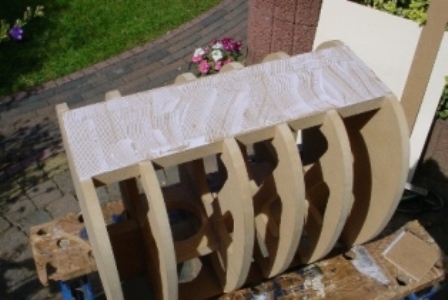
An impression of the inside framework.
Building the rounded cabinet was challenging: How to make a cabinet with a corner radius way bigger than any router bit?
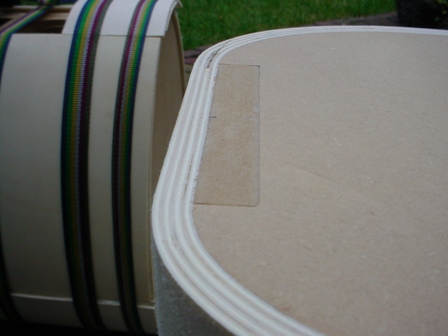
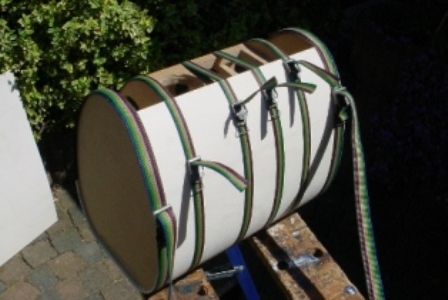
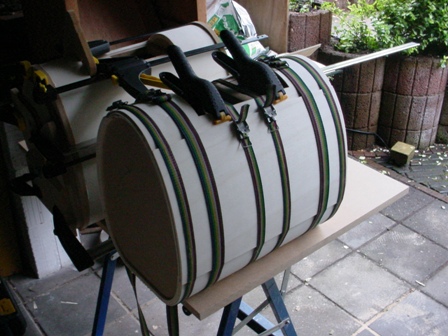
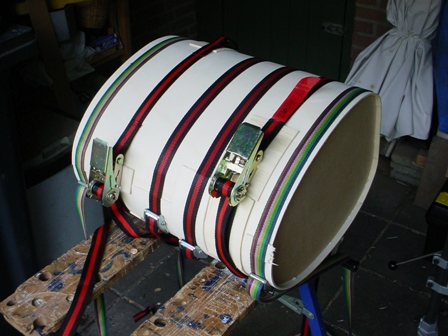
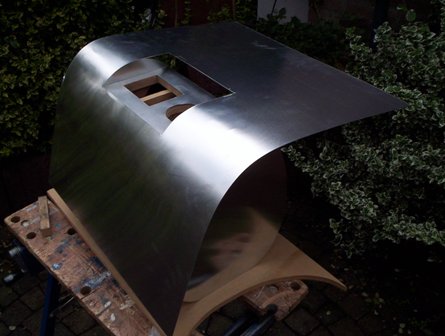
Built as a framework with a layered shell, the speaker cabinets of the Harwood 17 are made using bent lamination. Multiple thin plywood layers form the outside wall of the speaker box.
Build process
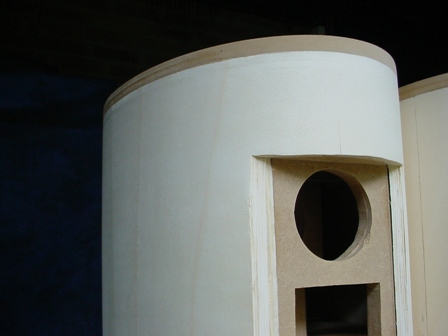
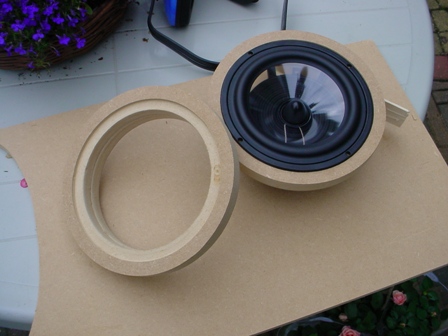
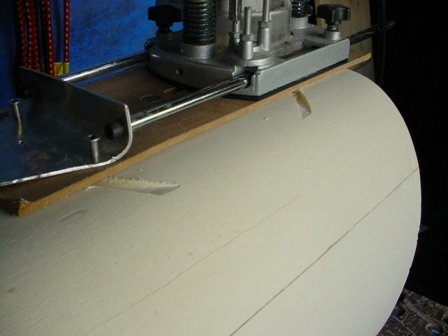
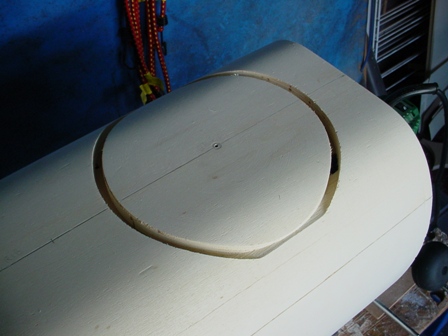
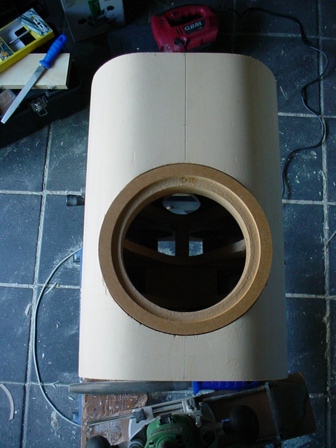
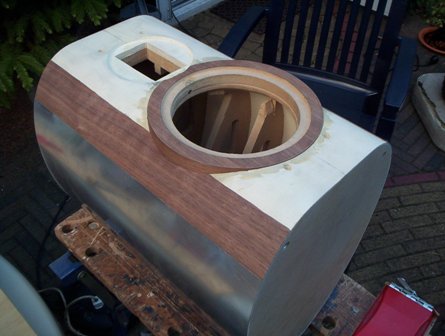
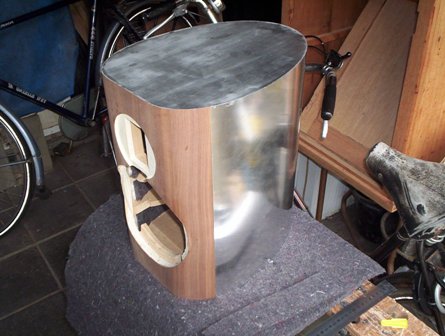
The pictures in the gallery on the right show the build proces of my Harwood Monitor 17.
It shows the constructed inner framework, the lamination steps for the outside wall, routing the openings for the speaker units and veneering the cabinets.
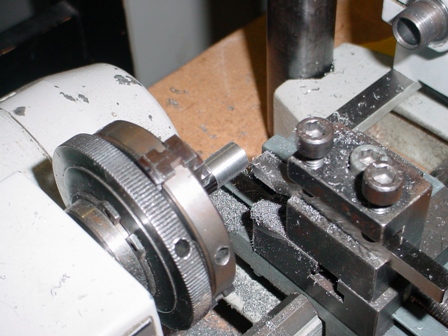
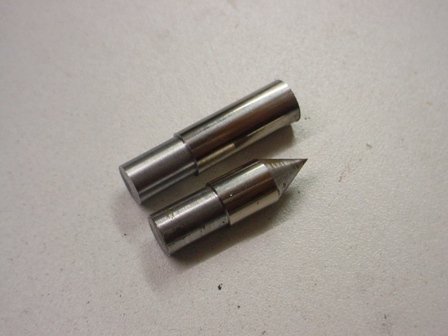
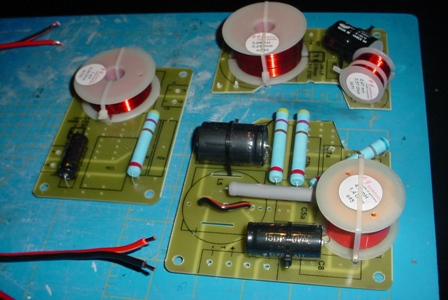
The crossovers were soldered onto crossover PCB’s and I even turned some spikes on the lathe.
End result
The end result is a speaker I am very proud of! It looks good, it sounds good!